
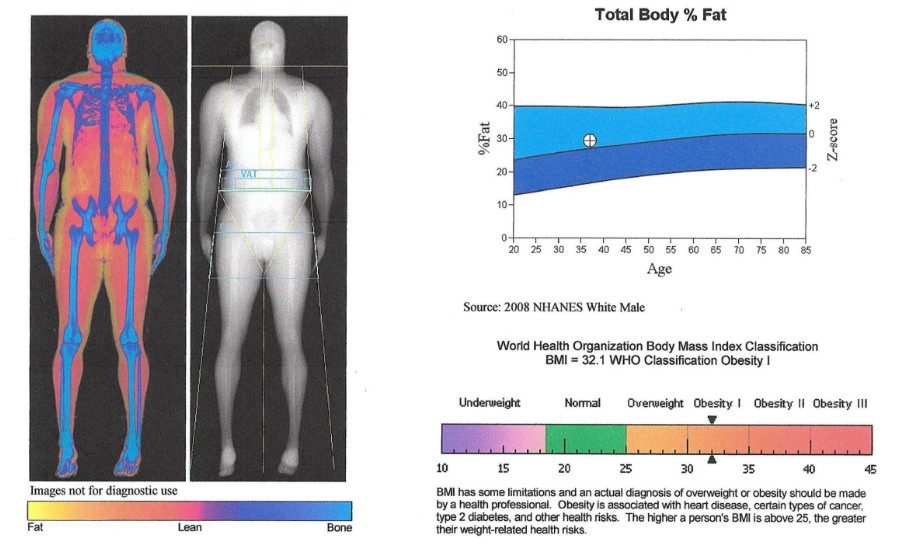
If you want more than a bathroom-scale number, a DEXA body composition scan gives you a clinical read on what really changed: fat, muscle, and bone. That clarity can turn scattered effort into a focused plan that works.
Now is a timely moment to learn about metabolic health and objective testing; residents of Ada and Greater Grand Rapids can schedule a DEXA Scan at the GenAge Center. Our team uses your scan to guide protein targets, strength training, and a practical metabolic plan you can sustain.
What a DEXA body composition scan measures
A modern DEXA system does three things exceptionally well:
- Lean mass by region and total body. You see how much muscle you carry overall and in each limb and trunk. This matters for strength, mobility, and metabolic rate.
- Fat mass with visceral and subcutaneous detail. Subcutaneous fat lies under the skin. Visceral adipose tissue (VAT) surrounds organs and is closely tied to metabolic risk. DEXA quantifies both, so you can track risk reduction, not just weight loss.
- Bone mineral density. You receive a baseline for bone health that helps assess osteoporosis risk and informs training and nutrition.
At GenAge Center, we use a Hologic system that provides color maps and numeric outputs for each area. We review the results with you so you can connect the data to the next steps.
Body composition vs. bone density modes
DEXA has two primary modes:
- Body composition mode captures estimates of lean mass, fat mass, and visceral fat across the whole body and by region. It is ideal for weight management, performance, and metabolic health planning.
- Bone density mode measures bone mineral density at specific sites, such as the hip and spine, using T-scores and Z-scores for osteoporosis assessment.
Both modes use very low-dose X-rays, but the outputs and use cases differ. Many adults benefit from both at baseline, then repeat body composition scans more frequently to monitor changes in training and nutrition.
Why DEXA is more actionable than scales or handheld devices
Scales and bioimpedance devices can fluctuate with hydration and timing — but the deeper issue with bioimpedance is how the technology works. Bioimpedance analysis (BIA) sends a small electrical current through your body and measures how easily it travels. From that resistance reading, the device estimates total body water, infers fat-free mass, and calculates body fat by subtraction. That inference chain is where accuracy breaks down.
Current doesn’t travel evenly through your body. It favors muscle and blood, avoids fat, and in most consumer devices never fully crosses the torso, where significant fat is stored. The result: bioimpedance consistently underestimates body fat and misses the regional detail you actually need to make smart decisions.
A DEXA scan is far less sensitive to these limitations and provides regional detail that consumer tools simply cannot. When you are trying to preserve muscle while losing fat, the difference is important. If the scale is down 10 pounds but your DEXA shows 7 pounds lost from fat and 3 from lean mass, you adjust your protein intake and strength training. If visceral fat barely budges, you revisit nutrition quality, recovery, and conditioning.
How GenAge Center turns your DEXA into a plan
Your scan is not the finish line. It is the starting line for a targeted plan:
- Protein targets. We set daily protein goals that match your lean mass and training, then translate them into real meals using our Mature Eating approach.
- Strength training. DEXA regional data can reveal asymmetries and undertrained areas. We recommend progressive resistance training to protect and build muscle, especially in midlife, when sarcopenia risk rises.
- Metabolic strategy. Visceral fat findings, paired with Resting Metabolic Rate (RMR) and, when helpful, VO2 results, guide caloric ranges, cardio intensity zones, and recovery work. This reduces guesswork and supports sustainable fat loss.
If you are exploring physician-managed weight care, our clinicians can integrate your DEXA with labs and a supervised plan at our Grand Rapids weight loss clinic. Learn more about our Healthy Weight and Metabolic programs on our weight loss page, including support from registered dietitians and medical supervision when appropriate.
What a DEXA scan costs and how to budget
How much does a DEXA scan typically cost? In our region, single DEXA body composition tests are commonly in the 150 to 250 dollar range. At GenAge Center, we offer the DEXA for 175 dollars (regular 225 dollars). Bundles can improve value. For example, our Healthy Weight and Metabolic Baseline includes consult, labs, DEXA, and RMR at package pricing. Because promotions and availability can change, call 616-737-1710 for current options before you book.
Is a DEXA body composition scan worth it? If you care about maintaining muscle while losing fat, or you want to address visceral fat risk with precision, DEXA is typically worth the investment. It prevents you from chasing the wrong number and anchors your plan to objective progress.
Safety, comfort, and what to expect
A DEXA scan is noninvasive and quick. You lie comfortably on a padded table while the scanner arm passes over you. Typical body composition scans take about 10 to 15 minutes; bone density site scans are faster. Radiation exposure is very low, generally far less than a chest X-ray and comparable to everyday background exposure. If you are pregnant or think you may be, tell the team in advance.
Preparation is simple:
- Wear light clothing without metal (zippers, snaps, underwire).
- Remove jewelry and accessories.
- Arrive well hydrated, and try to keep timing consistent across repeat scans for comparability.
- Avoid a heavy meal or intense workout immediately before scanning, which can subtly affect readings.
Our technician, Jessica, is known for clear explanations and keeping the process stress-free.
How often to scan and how to combine tests for a full picture
How often should you get a DEXA scan? Frequency depends on your goals. For active weight loss or performance blocks, many people scan every 8 to 12 weeks to confirm changes in fat-to-lean ratios and adjust training. For weight maintenance or bone health monitoring, once or twice per year is common. Your clinician will help set the right cadence.
For a complete picture, pair DEXA with:
- RMR testing to measure your baseline energy needs. This turns guesswork about calories into personalized guidance.
- VO2 testing to define heart rate training zones for efficient conditioning that respects recovery and drives visceral fat reduction.
Together, DEXA, RMR, and VO2 help you set precise protein targets, choose training loads, and manage conditioning intensity.
Local and timely note
If you live in Ada, Forest Hills, East Grand Rapids, or the broader Grand Rapids area, this is an excellent time to learn your metabolic baseline and start an objective plan. You can schedule a DEXA at GenAge Center in Ada, or book a combined baseline that includes consult, labs, DEXA, and RMR.
For details on physician-directed DEXA services in Grand Rapids, see our page on DEXA body composition. If you want a comprehensive start with nutrition and medical support, explore our physician-led programs for weight loss in Grand Rapids.
Quick FAQ
- Can a DEXA scan show body composition? Yes. DEXA measures total and regional lean mass, total fat, and estimates visceral fat. It also measures bone mineral density when bone mode is used.
- Are DEXA body scans worth it? For most people working on fat loss, muscle gain, or metabolic risk, the clarity from DEXA is worth it. It helps you keep muscle while losing fat and track visceral fat changes.
- How much does it cost? Typical standalone scans range from about 150 to 250 dollars locally; GenAge Center has recently offered promotional pricing within that range. Call for current rates and packages.
- How often should I scan? During active change, every 8 to 12 weeks is common. For maintenance or bone health monitoring, once or twice yearly works for many.
- Will insurance cover it? Coverage varies. Because policies differ, contact the clinic for the most accurate guidance.
Next steps
If you want data that leads to action, schedule a DEXA or book the Healthy Weight and Metabolic Baseline to bundle consult, labs, DEXA, and RMR. Our team will translate your numbers into a practical plan for protein, strength work, and conditioning, then retest to keep you moving forward.
Call 616-737-1710 or request an appointment online. Residents in Ada and Greater Grand Rapids can get started close to home.
- Learn about DEXA body composition services in Grand Rapids at our DEXA page: https://www.genagecenter.com/dexa-body-composition/
- Explore physician-guided weight and metabolic programs, including nutrition support and RMR testing: https://www.genagecenter.com/weight-loss/


